Category: +Featured

Featured content shines a spotlight on the cutting-edge and most innovative projects making waves in the world of UX. These projects delve into the exciting frontiers of UX and UI design, showcasing my versatility across diverse industries, from fintech and healthcare to fast-transactional gambling and recruitment technology.

  • Part II; How being more consultative can sooth the UX process – COVID Special

    Part II; How being more consultative can sooth the UX process – COVID Special

    TLDR; Boost your workflow without breaking a Zoom sweat in this COVID-friendly remote special. Simplify KO’s, pinpoint problems, and find your perfect toolset. Unleash the life-saving power of Dual Track UX Delivery. ‍ 

    This is Part II of a two-part article looking at improved Ways of Working from a consultative UX perspective. Please visit Part I: How being more consultative can sooth the UX process – COVID Special to where I focused on;

    • Simplifying the KO process
    • Defining problems to solve
    • Tools and their limits

    Real world examples

    Product inconsistencies

    Moving on from the KO process and tool limits (see Part I). Part II drills down on real world ‘quick wins’, tracking tasks and signposting. Conclusions will sum up.

    Labelling and Buttons

    Focus on your speciality, and reach out when you need help
    Focus on your speciality, and reach out when you need help.

    ‘Quick wins’, including consistency like tracking labelling decisions (with accountability) and pressing the right primary (or secondary) buttons should be your focus as a consultative UX designer.

    This visual how confusion over two descriptions. Custom mapping within DBS is a complicated animal so learn on your front-end developer who has the skills to explain payment endpoints much better than any creative.

    When mental models don’t align

    Identical terminology should be used in prompts, menus, and help screens; and consistent colour, layout, capitalisation, fonts, and so on, should be employed throughout.
    Use the Gestalt ‘Law of Similarity’ principle and keep parallel screens similar.

    The “Law of Similarity” states that elements tend to be perceived into groups, if they are similar to each other. Meaning if you have elements with the same functionality, meanings and hierarchy, they should be visually similar. 

    (more…)
  • What I learned from facilitating a UX remote workshop – COVID-19 SPECIAL

    What I learned from facilitating a UX remote workshop – COVID-19 SPECIAL

    TLDR; Modern ux-ers need to skill-up, keep pushing best practice and do their homework when preparing for remote workshops. Adapt with more structured activities, beef-up the tech and deliver digitally with feedback and collaborative tools.

    From the T-shaped designer to a online creative technologist

    business

    Technoligy

    MArketing

    Developemnt

    As worldwide events are changing everyday life, so are the expectations of today’s experience designer. This designer is becoming more of a conduit between business and tech, between marketing and development. Linking these disciplines together is the UX expert, whether that be instituting Design Thinking or facilitating workshops, the bar is getting set higher and higher and today modern UX’er needs to be ready, and needs to be T-shaped.

    For the past few years User-Centered Design (UCD) and Lean UX has been top of my agenda and prioritising the very best elements of those ideologies is a skill I’m fine-tuning everyday. UX Workshops, in their many different guises are designed to empathise, to understand and then lead on towards a POC or some flavour of a prototype. This has many benefits from collaborative thinking through to group alignment and collective contribution. Like ideation and journey mapping all in a face-to-face collaborative style.

    Empathise to get a better understanding of the problem to be conquered. Use activities like ‘Ask the experts’ to gain insight into user needs – set aside personal assumptions and focus on defined problems. Ideate and generate logical ideas that lead to creating an inexpensive test product (prototyping). Fail early, iterate and make your product inherently better.

    In these more challenging times, how do we design professionals help to facilitate that collaborative nature from behind a computer screen and without having that face-to-face connection? Build relationships with teams distributed across the country or globe and communicate the value of journey mapping while engaging people in the process is even more challenging, especially when those people can’t witness the actual activity. Ideation and mapping exercises over-the-wire is a challenge so here is my perspective following a recent remote workshop I chaired with a real estate client.

    Pre workshop – Be like a boy scout

    PREPARE

    Agenda

    Links

    I’ve said in previous articles, you roughly need twice the presentation time for preparation and this is equally true when you’re delivering the remote flavour of a UX workshop. Leading from the front as a facilitator and as a creative technologist ultimately the success of a remote workshop does revolve around the technology you have to hand. Make no assumptions, if your connection is not strong enough or your cameras are not clear enough the success of your remote workshop is that risk. 

    Ensure you have a quiet, comfortable and illuminated room

    Think about a headset with the microphone and also about the best video conferencing solution.

    Ensure your default check boxes are all ticked here.

    Setting the Stage

    Include an agenda to manage expectations

    Following intros, the ‘Product / Feature Vision’ is first up. ‘The Challenge’ preceeds a best practice master-class on the product or feature area. Another short intro into my UCD process I then asked ‘My five big questions’ followed by a personas session. Features leading to a genuine ‘Nice to have’ discussion also helps manage expectations. This leads perfectly into a Mapping and Ideation. Keep to your agenda, its important.

    Unfortunately, you won’t have those two minutes pre-KO to ask about the weather and to build bridges, so make sure introductions are timetabled.

    Keep the conversations flowing by including the Product Vision and The Challenge Definition as early pieces on your agenda. The remote nature of these first interactions are crucial, it’s important to allow all to contribute and keep the conversation flowing by re-iterating;

    • What has been done
    • What we are doing
    • What we will do.

    Elevate the Baseline

    Asking the right questions early helps set the stage. What problem are we trying to solve and can I have the big picture? Who are the User types and the Persona and what are their pains and gains. What are the project aims and how do we measure success? A good question to ask is why use this feature and not an alternative? 

    It’s important to gauge the creative intelligence on the people in the virtual room. This should come both from your research of the attendees pre workshop, and by calling out by name to promote engagement, asking people for their introduction at the top of the hour. My experience says go with the lowest denominator and bring everyone up to speed on process, on base level concepts behind Design Thinking and on how collaborative session usually work and ask the big questions.

    • What problem are we trying to solve and can I have the big picture?
    • Who are the User types and the Persona and what are their pains and gains.
    • What are the project aims and how do we measure success?
    • Why use this feature and not an alternative? 
    • What is you question to the group?

    Don’t forget to share pre-prepared documentation or links to aid further reading across your comms channel of preference.

    Keep your process, but adapt

    Personas

    Journey Mapping

    FEature list

    Charting the steps through this journey begins with search and select, then the user can choose the time, with options for the users showing available spots in the next week. Booking information should all the information that the contractor needs and finally the journey ends with the confirmation email and/or a text message.

    Activities like early hypotheses session, through to personas building, demo’s and deep dives into feature lists discussion all still have their place in the remote workshop scenario – they just tweaking to ease them through. Everyone must understand the purpose and the outcomes of your activities. For instance customer journey mapping; recognised as one of the more challenging workshop activities especially amongst debutante participants I recognised I had to most of the heavy-lifting myself.

    My goal for this instance was to quickly understand the current journey within a limited time, involve as many internal stakeholders from bus dev, legal, CS to engineering.

    Have at hand your collaboration doc, detailing activities with timings and outlining techniques. This acts a guide through all your calls and should be shared on screen and as a single point of truth when concluding the workshop. My take out here is keep it simple, use bullet points and subtle branding.  

    Google Docs is your friend here. It’s also a good idea to later move your visual findings to Mural and Miro (formerly RealTimeBoard)

    Ideation, in a low fidelity way

    SHARE BOARDS

    CHAT & messenger apps

    Initial first stage ideas from modal windows to small reveal to large reveal concepts. All helped lay the foundations in a low fidelity, if less collaborative, way.

    When mostly everyone is remote, take advantage of Real-time board or Muraly or Sketchboard. Even splitting participants into columns on Google Sheets and allowing real-time contribution is a workable solution.

    For instance, a spontaneously pencil sketch can be captured on your mobile and shared relativity instantly across Slack, great for what I call remote ideations. These can then be cataloged in your collaboration doc and / or uploaded to your Miro board.


    Digital Prototyping from the Digital Experts

    Taking the very best of concept #2 enabling the user to both see availability but also to drill-down and add must-have functionality. Also cherry picking elements from #4 and solving the visibility of contractor availability.
    Taking the very best of concept #2 enabling the user to both see availability but also to drill-down and add must-have functionality. Also cherry picking elements from #4 and solving the visibility of contractor availability.

    There is a benefit to being digital designers thinkers in a digital world. So take advantage of this when building and eventually sharing what is in most cases, a digital prototype. Use industry standard tools your clients should be familiar with that can aid both sharing and collaborating within a remote environment.

    You should still be starting with low fidelity sketches from you Ideation Sessions (see earlier) but eventually this will lead to the big reveal. InVision is my weapon of choice here, it’s quick, it’s collaborative and it’s becoming the industry standard.


    Post workshop wrap-up 

    Personal details

    Pre-registration

    Feedback and comments will help shape and strengthen future workshops.

    In true 360 fashion and in the spirit of UCD from my remote perspective it is good practice to reach out to evaluate the effectiveness of the workshop. Ask for assistance in completing an evaluation and eave the door open to respond say within a limited time period to keep the data fresh.

    There will always be pitfalls to this type of distance collaboration, my key take-outs are;

    • Reduce friction by introducing activities more appropriate
    • Tell your team what you are about to do
    • Tell them what has been done
    • Follow your script, set out in your collaborative doc

    Finally, inform the team that there is a central repository (Dropbox or Miro or other cloud share is ideal for this) and ensure all have access; this becomes a great place to dump visuals, photos, text files or movies. This is also a great place for the collaboration doc which eventually evolves into your UX report.

    So, have fun by keeping the dynamics high, reducing distractions don’t forget to learn yourself and document religiously. Ramp up your note-taking skills, you’re going to need them!

    Appendix

    Your remote toolbox*

    • Google Docs, Sheets and Slides – the go-to applications for collaboration.
    • Real Time Board — A remote whiteboard tool for stickies and comment
    • Go To Meeting / Zoom — Video conferencing that allows you to show slides and record screens.
    • Slack – Document your chats, and share group or personal videos.
    • uxpressia.com – Online journey maps and personas

    * Please note this toolbox is by no exhaustive. This industry is was booming and pivoting every day.

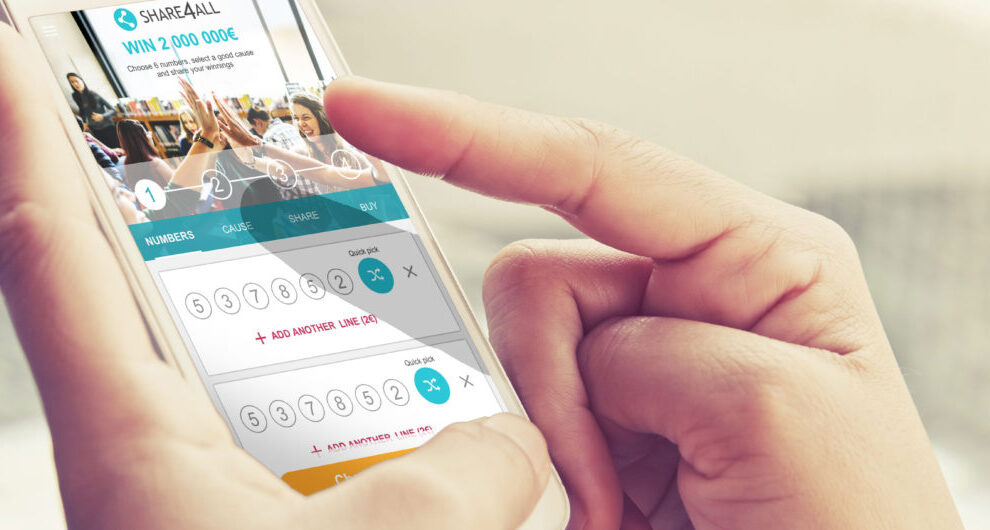
  • Digital. Social. Lottery.

    Digital. Social. Lottery.

    arget audience: Millennials who prioritise experiences over possessions.
    Innovation: Mobile-first web app emphasising social sharing, ‘good causes’ integration, and smooth number selection.
    Key features: Rapid number selection, seamless sharing, integrated charitable causes, user-friendly payment process, and engaging summary screen.

    Recently I have been leading a small team, driving UX innovation and engagement to significantly boost player acquisition and retention rates for a digital lottery provider. A mobile-first project designed for millennials, focusing on sharing, social impact, and a smooth user experience.

    My role involved pushing UX innovation and engagement to attract and retain players, while partnering with state lotteries and charitable organisations to build and enhance their digital lottery channels.

    Welcome to work of social lotteries!
    (more…)
  • Wire-framing for the larger to the smaller screen

    Wire-framing for the larger to the smaller screen

    TLDR: Following on from my recent ‘How user personas can help crystallise the early stage design process’ post, here the focusses is on realising wireframes and responsively design. This post looks at providing a snapshot of how to visualise the findings and create an experience for both desktop and mobile.

    The Challenge

    The focus here is on strengthening the sales staff understanding, how to cross-sell and provide a tool to effectively push leads through to conversion.

    Primary user goal

    These wireframes concentrate on the lead generation in the automotive industry but these principles are clearly transferable.

    (more…)
  • Part I – Designing a Secure Document Repository

    Part I – Designing a Secure Document Repository

    TLDR; In the summer I was the lead UX designer in a time-boxed 3-month service integration project. Internally future-vision looked to position this product as the hero application within the suit of financial apps and services available at this large international retail bank and the worlds largest asset manager. This data integration would potentially push it front-of-stage.

    Read more
  • How to run on-site UX Workshops and make them both valuable and fun

    How to run on-site UX Workshops and make them both valuable and fun

    TLDR: Recently, I had the privilege of leading a Design Thinking on-site 3-Day UX workshop for a global financial news organisation, a pioneering force in the industry. These workshops marked the launch of the discovery phase for a groundbreaking new product, and I was thrilled to guide the team through an immersive and productive experience.

    Let’s set some ground rules

    Before I begin, let’s be clear, planning and preparation are you best friends. Be aware, planning creative sessions like these take time. Allow double the preparation time to the actual workshop time, so this three-day think tank translates to six days of dedicated planning. Having this knowledge is golden, don’t set yourself up to fail because you haven’t done your homework. Avoid the pitfalls of a hastily assembled workshop and set the stage for a truly groundbreaking experience.

    (more…)