Communication design is a mixed discipline between design and information-development which is concerned with how media intermission such as printed, crafted, electronic media or presentations communicate with people
Jane purchases a new TV to watch the Olympic Games
Following on from my serions deadling with Pay With Your Phone #1, #2, #3 and #4, this post is about those luxury items with luxury prices. The value of voucher purchase, and the growth of Groupon have inspired this type of purchase across many channels, especially mobile. The benefits mobile vouchers deliver include increased revenues, improved brand loyalty and instant, measurable direct-to-customer marketing
Jane goes shopping for new TV
She see one that is slightly out of her price range
She checks her balance using her app and needs an extra £300
Jane decides to increase her credit and selects this option
After reading the T&C’s, Jane confirms the increase
Jane makes the purchase and her TV is delivered to her home
This is but part of a selection of consumer experiences russellwebbdesign generated for credit card payment concept ideas. Please contact us further to discuss if your brand really wants to benefit from this new immersive experience here:info@russellwebbdesign.co.uk
You can preview the mini-presentation here or via our YouTube Channel here
If this, or any other post has peaked your interest, please leave your comments below
Many years ago, while conceptualising mobile experience for a London-based creative agency I proposed the following for a price comparison client. I wanted to post it here to illustrate how this type of creative has chnaged since back in the day. I love the mention of the App Store as being an ‘exciting place’, but more importantly I retrospectively enjoy the fluid hand-drawn presentation style I had back then. Read on for more old school insight!
Insight
Moneysupermarket (MSM) have a strategy to leverage their comparison brand and branch out into the App market. This is a very exciting space and MSM are keen to increase their presence.
Brief
Utilising the API source from Moneysupermarket, deliver a real WOW experience for leveraging to the Moneysupermarket brand a hand-held and convenient way to find a pizza near you. This app will be section designed, filtering out pizza types and sizes, allowing the user to access special deals and discounts relative to their location and providing a unique ‘radar’ feature for locating pizzas.
MSM offer a difficult branding experience. Purely because the logo and the values of the company contradict each other. Clearly for a unified brand experience there needs to be some consistency – as MSM are generating a family of iPhone Apps, the same (or brand) should run across all interfaces. This App revolved around the red wine colour.
Loading Screen
Following the suite of application already in existence this home page uses a brand texture while re-enforcing the new icon.
Home
‘Hot Deal’ and ‘New Offer’s are previewed via a carousel, the phone location software allows for offer nearst to you and feeds the ‘Latest Deals’ – all feed direct to the home page.
Pizza Price Compare
Selecting a slice size and topping the app then uses the MSM customised API source to find pizzas set to that criteria.
Radar
Adding a certain element that is both fun and ‘gimmicky’ the radar screen rotates and blips on finding the pizza near you.
Registration page
Adding your postcode and email address allows for MSM to feed your voucher and supply the user with an improved experience.
Pique’d your interest?
This is but part of a selection of design information russellwebbdesign generated for the creative community out there. Please contact me further to discuss how your brand can benefit from the new channel: info@russellwebbdesign.co.uk
If something has peaked your interest. Please leave a comment below.
Mobile banking users with smartphones check their accounts on average 18-20 times a month – compared to an average of six times a month for those accessing their accounts via online banking. see more
Jane is on the bus. She wants to check her balance before making any purchase
She gets her phone out to use the onscreen widget
After holding her finger over the appropriate icon, her balance is displayed
This is but part of a selection of consumer experiences russellwebbdesign generated for credit card payment concept ideas. Please contact us further to discuss if your brand really wants to benefit from this new immersive experience here: info@russellwebbdesign.co.uk
You can preview the mini-presentation here or via our You Tube Channel here
If this, or any other post has peaked your interest, please leave your comments below
Jane gets up and travels to work by bus. Pays with NFC.
When your Android phone suddenly tells you that you get a 50% discount on travel with this bus company, Groupon just starts looking a bit frivolous. But what exactly is this experience and how can it work?
Jane uses the bus to get to work.
On the bus Jane uses her mobile wallet to pay for her ticket against a NFC terminal
On payment she receives a “payment confirmation” message
Mobile payment is much better
This is but part of a selection of consumer experiences russellwebbdesign generated for credit card payment concept ideas. Please contact us further to discuss if your brand really wants to benefit from this new immersive experience here: info@russellwebbdesign.co.uk
You can preview the mini-presentation here or via our You Tube Channel here
If this, or any other post has peaked your interest, please leave your comments below
Developed as a concept only, this A2 poster piece captures the more experiential and design-led projects the company NewToy, a subsidiary fo MiG (Mobile Interactive Group) became renowned for.
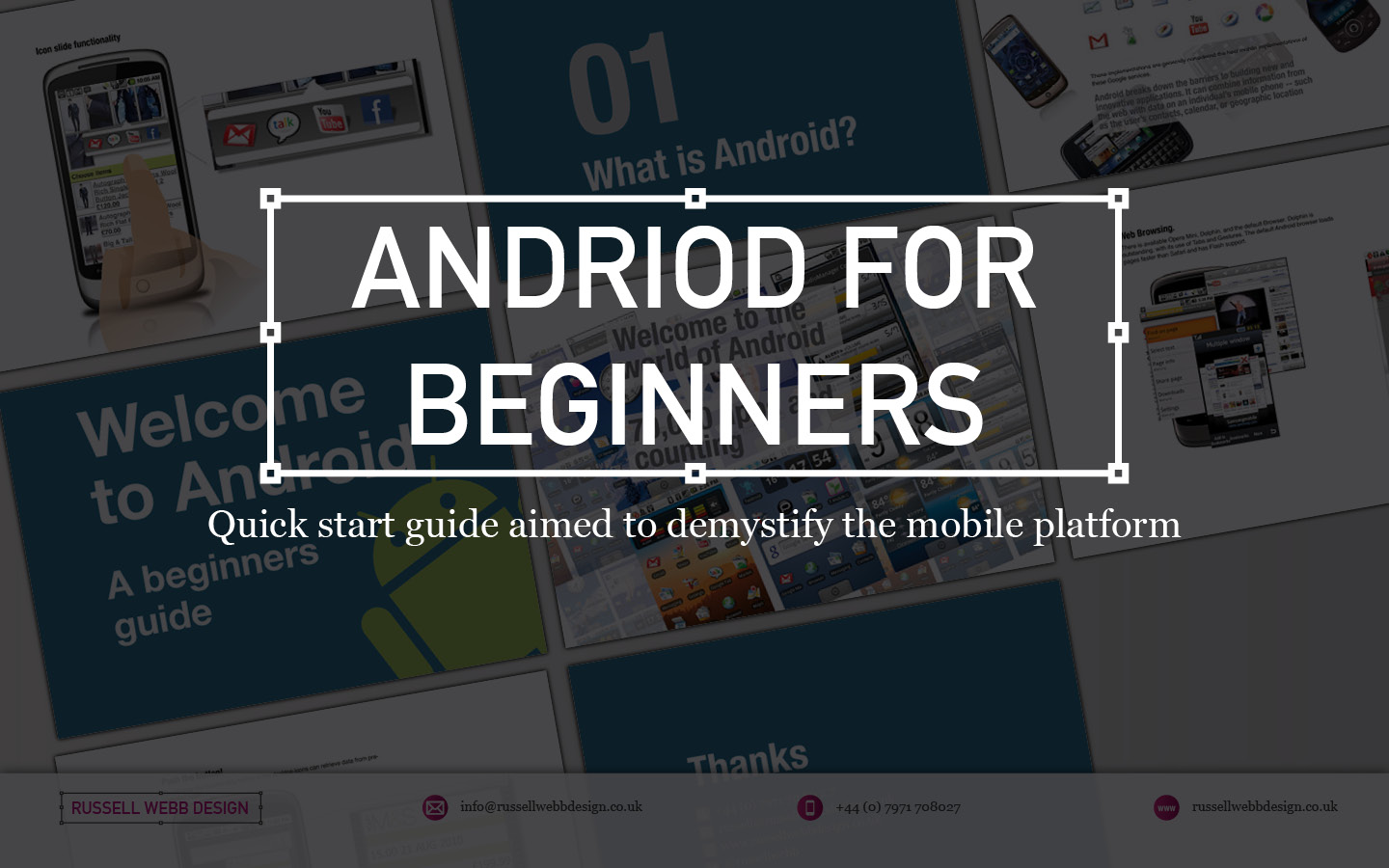
Imagine being a senior executive at a UK company, suddenly tasked with understanding the intricate world of Android. Time is tight, and you need a crash course that cuts through the technical jargon and delivers the essence of this mobile platform. That’s where I stepped in.
For senior executives
My UK client were seeking a crash course in the world of Android, I crafted a top-down, user-experience-focused overview of its driving principles.
This quick-start guide wasn’t just about features and functionalities; it was about the why behind them. In essence, how Android shapes user interactions, from app design to navigation and information consumption.
Welcome to Android – An Open Operating SystemWelcome to Android – 70000_App and Counting
By focusing on the driving principles that underpin the Android experience, equipping the user with the knowledge to make informed decisions. Whether you’re evaluating potential development projects, understanding your target audience’s behaviour, or simply staying ahead of the curve, this guide provided a solid foundation.
Welcome to Android – How
Design for Humans
Welcome to Android – Widget_Functionality
Understanding the user experience isn’t just about technical specifications; it’s about grasping the human element that drives engagement and ultimately, success. This quick-start guide was designed to do just that, empowering you to navigate the world of Android with confidence and clarity.
Android Widgets: Tiny Tools, Big Impact
Think of Android widgets as miniature apps living on your home screen. They offer:
Quick Info: Weather, news, calendar events, and more at a glance.
Instant Actions: Play music, add events, control smart devices – all without opening the app.
Customization: Choose size, information, and even themes to fit your needs.
These handy tools boost your efficiency, personalize your experience, and keep you informed without opening full apps. Explore various types like simple info displays, scrollable lists, and interactive buttons to find the perfect fit for your needs.
Welcome to Android – Browser and Flash
The End of an Era
RIP Flash
Flash was designed for the desktop era. I have left this in as IT IS interesting to get an insight in UX 15-years-ago, but to clear: ANDROID DOES NOT USE FLASH NOW
Why?
Outdated tech: Flash wasn’t built for touchscreens. It will drain batteries and there is no native support.
Security sieve: Flash’s history of vulnerabilities made it a hacker magnet.
Adobe officially announced the end of Flash in 2017. Its inability to adapt to the changing landscape left it vulnerable to the more agile and secure alternatives that had taken center stage.
While Flash may hold a place in internet history, its reign in the mobile world was short-lived, ultimately succumbing to the demands of a faster, more secure, and user-centric mobile experience.
Welcome to Android – Thanks
Discover high-impact UX case studies
Portfolio case studies describing design, my UX process, and business impact.
From boosting user adoption in fintech, to improving trust with responsible gambling through to retaining Millennials in the world of ‘digital lotteries UX’ to leveraging key USPs for mobile healthcare.