Tag: UX

  • Pt I – Money Management App UX Challenges Explained

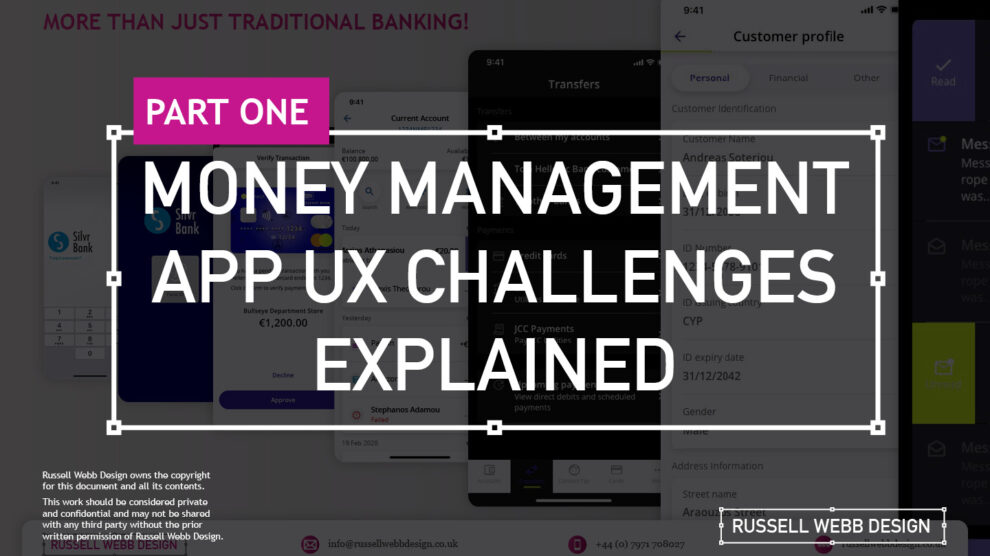
    Pt I – Money Management App UX Challenges Explained

    A two-part deep-dive focussing on mobile UX design targeting seasoned designer-types, mastering Design Theory, and navigating lean Agile challenges.


    Hard Skills:

    Journey Mapping

    Research

    Visual Design

    Soft Skills:

    Empathy

    Collaboration

    Critical Thinking

    Full List →


    Welcome to Pt I

    Real-world app design challenges by persona

    This two-part case study will be exploring UX design challenges within the financial ecosystem that different flavours of UX designers can face. Part I focuses on why wealth management apps are becoming super relevant and how certain UX designers experience different challenges.

    Along the journey, I will also be supercharging the project objectives;

    • Catch-up feature parity
    • Prioritising critical features
    • Stakeholder education (Design Systems)

    Let’s kick off by asking ‘What type of UX-er are you?’

    Silvr Bank – Europe’s Best Digital Bank*

    *Silvr Bank is a fictitious organisation but these are real-world challenges I have experienced in real-world projects with real-world clients.

    The overarching goal with Silver Bank* is to design an interface for a thriving Generation X user group, with an emphasis on growing the fledgling millennial users – i.e mobile-first. The C-level were looking to expand and improve their digital offer.

    3,000 employees | 85 branches | 2nd biggest player in its market

    What type of UX-er are you?

    UX Designer types – How UX designers approach their challenges depends on many factors. Experience, background and where a designer is on their journey are all influencing characteristics.. 

    The challenges are many, so to focus this case study and depending on where you are in your UX journey, both as an individual and within a team, I have split these challenges in to three typical UX professional personas;

    • Mr ‘UX-design-is-completely-theoretical’ Designer
    • The brainstorming UX Designer
    • The UX Consultant on-a-mission

    In this post, let’s drill-down on challenges faced by our first persona;

    Mr ‘UX-design-is-completely-theoretical’ designer 

    This designer is at the beginning of their journey. They are a sponge, soaking up the design thinking processes and navigating their way through YouTube UX tutorials. Along the way they do need to get their hands dirty and experiment. To push back on theories, effects and laws. Learn to go with their gut and develop that inner self, that inner individual designer.

    Laser Focussed on Design Systems and Best Practices

    Design Systems from Hell – The benefits of a fully functional Design System are clear. Consistency. Speed. Best Practice. Collaboration. But when there isn’t a dedicated team or individual maintaining Component and updates. This is when the theoretical designer falls down and you get four bottom sheet options for iOS.

    Maintenance of a fully functioning Design System has its own set of challenges. Inevitable non-creatives will ask;

    1. For a ‘Design System’, where are the outcomes for non-creatives? 
    2. Who and how is it maintained (and who pays for it)?  

    Product teams will inevitably be looking for final deliverables they can understand (and charge for). This typically manifests itself as desktop and mobile UI screens. So while your designer is focused on perfecting their Design Token Figma file, the rest of the team are simply waiting for consistent UI.

    Get you hands dirty… then give-back

    Experienced designers learn their trade. The rest gain practical knowledge while learning the theoretical way. So experiment, make mistakes, try again, share your experiences, and then give these lessons back to the design community as an experienced designer. [For example, this post]

    (Too much) user experience psychology

    Which option matches which theory. The real skill comes for a UX designer to cut through the noise and go with the science. I have my opinion – Do you?

    Theories and Laws can become overwhelming;

    • Retention Theory – Proportion of the information vs. time spent on a page
    • Serial-Position Effect – Recollection of the first and the last in a list of words
    • Hick’s Law – Response to multiple stimuli is delayed forcing user to ‘stay longer’ 
    • The Schema Theory – Human brains like to organise knowledge into meaningful units, or schematas 

    … I could go on, (my go-to is personally Gestalt Principle). From another perspective, and another theory:

    Humans are fickle creatures, they don’t follow the rules.

    These theories alone can help with design decisions, but there is no ABC, no tried-and-tested foolproof formula. So make the intelligent choice, be brave and go with your instincts.


    Explore other perspectives on money management challenges

    You now have a snapshot on why these management apps are so prevalent from one designer type perspective. But what challenges do other UX designer types face, see Pt II – Money Management App UX Challenges to explore how experience and perspective can influence the challenges and solutions you may face as a certain designer type.

    RussellWebbDesign: Get your fill of UX trends, case studies and best practice
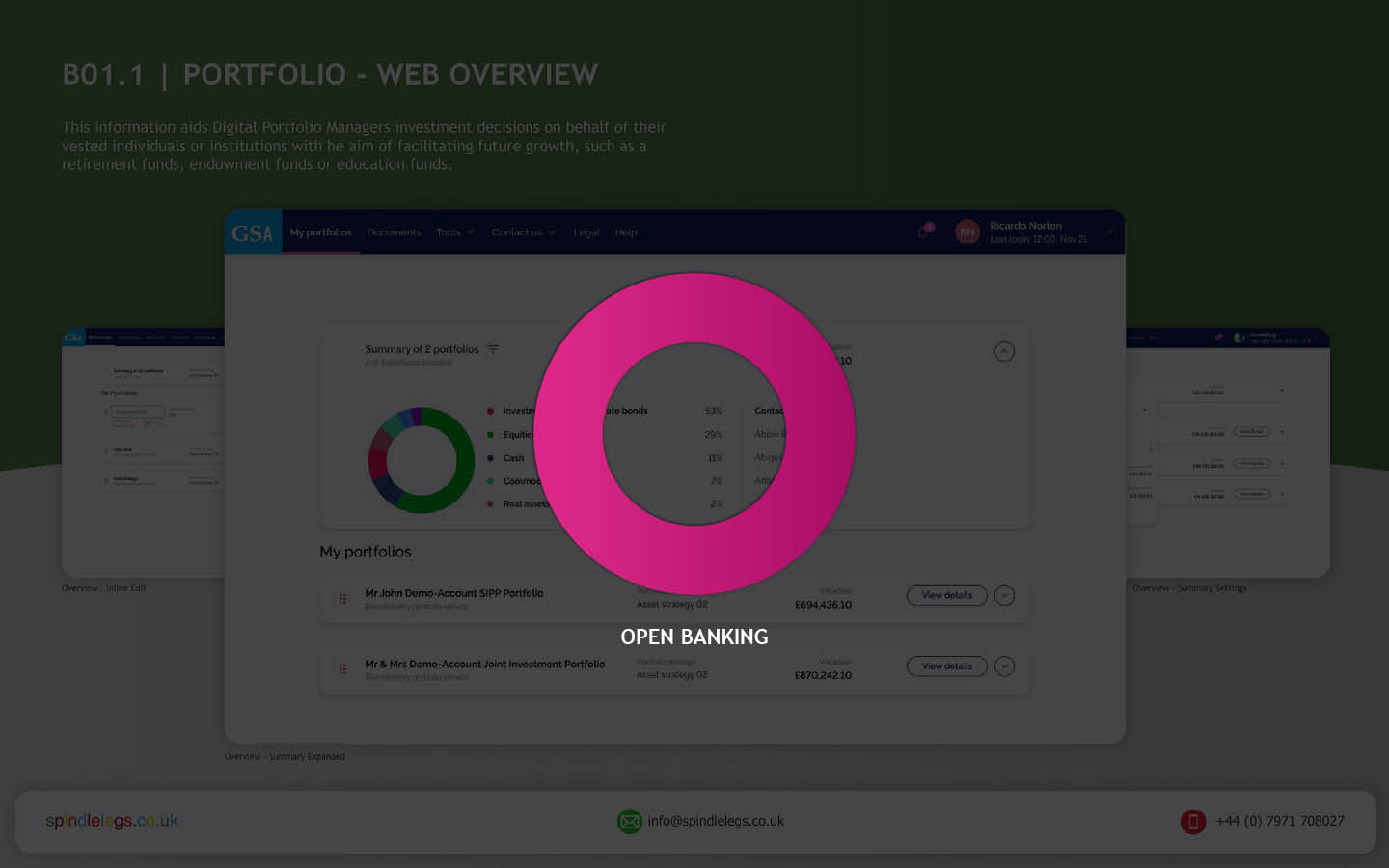
  • What is the role of open banking in the super app evolution?

    What is the role of open banking in the super app evolution?

    TL;DR Open Banking unlocks a future where financial apps become indispensable partners. A power-shift to more convenience, better financial education and meaningful relationships. Read on to see What’s next in this new ecosystem?


    Hard Skills:

    Journey Mapping

    Research

    Visual Design

    Soft Skills:

    Empathy

    Collaboration

    Critical Thinking

    Full List →


    What is Open Banking

    The role of open banking in the super app evolution is enormous, it is essential for creating a smoother user experience. Open banking is the core technology that allows these apps to draw financial data from multiple sources (APIs) and design products and services that speak to the needs and wants of the end-user.

    Open Banking helps super-apps with:

    • Personalisation: Gathering data to enhance recommendations, habits and trends based on the user’s behaviour.
    • Centralisation: One app to rule-them-all, one roof and one umbrella. No need to switch apps to switch functionality (i.e.make payments, check portfolio performance, monitor transactions, etc).
    • Open finance: Super apps and open banking are foundational pieces in the financial ecosystem jigsaw – mortgages, savings, pensions, insurance and credit, can all talk to each other.

    Super app benefits for wealth management

    The end-user now enjoys luxuries that a few decades ago would seem unimaginable. Wealth Management (WM) was dated and rigid, Financial Institute in pole position, controlling the action. The birth of the super app has tipped the balance of power to the investor, putting them in charge of their finances.

    Convenience

    The super app has evolved to give the consumer (and investment professionals) a one-stop shop for all their finances. Investors used to jump from website to website and from platform to app to check transactions, transfer money, pay bills, etc. Now within is single-pane-of-glass, user control their financial world.

    Smarter decisions

    Phone a banker, broker or accountant to see how their money is affected by fragmented financial knowledge; Financial decisions needed the experts.

    • Did the expert always have your best interest at heart?
    • How close and personal was that relationship with these experts to trust their recommendations
    • How transparent were they?

    The super app brought an dispassionate, clean, and precise approach to financial decision-making. It has trimmed-the-fat off the process, presenting users with the best viable option.

    Enter the financial super app

    A super app alleviates financial institutions from transaction processing, compiling data, building risk profiles and other traditional banking functions. It allows banking institutions to focus on building meaningful relationships with investors.

    It centralises their attention and indirectly allows Portfolio Managers to tailor their campaigns for new products and services. Relationship Managers now know where their audience is; all they have to do is put the right thing in front of them.

    From viewing fund performances to the allocation of assets, to understanding these assets positions, to what transactions have been actioned and reviewing portfolio valuation.

    The future for financial super apps?

    Data management

    Third parties, organisations and fintech companies need to understand

    • Where the data is coming from
    • How they store it
    • How they use it

    This is the way to build bulletproof information flows.

    AI-driven Financial Coaching

    Artificial intelligence in money management apps process data quickly and efficiently. By monitoring financial behaviour, AI can assist users in maintaining smart savings, refinancing, achieving financial goals, and even more*.

    *With approval, of course

    Get in touch

    Want more?

    Discover how FI’s can can offer all clients personalised advice, how UX can help investment firms stay relevant in our neobank world and how to build a *Financial Super App – One click at a time.

    *NDA Case Study Walk-Thru

    It truly is, a Brave New World!

    RussellWebbDesign: Get your fill of UX trends, case studies and best practice
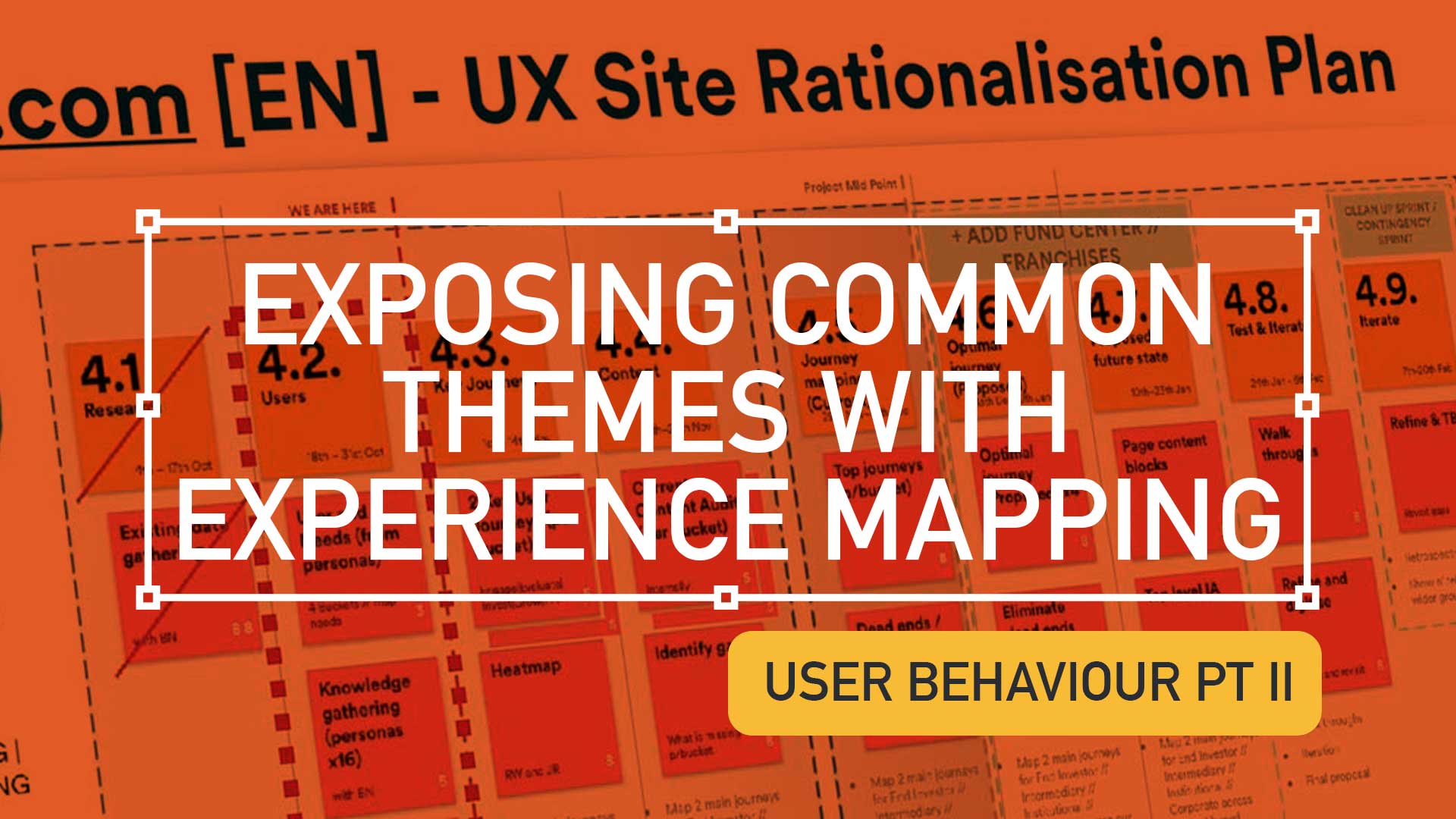
  • Using Experience Maps to uncover user behaviour Pt II

    Using Experience Maps to uncover user behaviour Pt II

    TLDR: Reveal a tapestry of needs and motivations that shape financial decisions. Using Experience Mapping to uncover insights into the customer lifecycle and expose common threads.

    Contents


    Hard Skills:

    Journey Mapping

    Research

    Visual Design

    Soft Skills:

    Empathy

    Collaboration

    Critical Thinking

    Full List →


    Please note; for client confidentiality sensitive parts of all imagery has been pixelated. All work is copyright ©RussellWebbDesign 2023

    This article builds upon the previous post ‘Get to know your users better‘. For a more comprehensive understanding of the UX and Service Design process that led to this point, I encourage readers to refer back.

    Visualise the Journey

    From Common Themes to Experience Mapping

    You should now really begin to unravel the who, what and why that define your target audience. Now there is an opportunity to unearth the common themes that weave through their experiences, transforming them into actionable insights through experience mapping.

    Generic heat map, or Experience Maps showing user needs, problems and goals. Transform these themes into actionable insights that will guide the design process to resonate with the needs of your users.
    Generic heat map, or Experience Maps showing user needs, problems and goals. Transform these themes into actionable insights that will guide the design process to resonate with the needs of your users.

    Applying mapping techniques to personas types

    Shifting the traditional application of an experience map and focussing on the customer lifecycle particular to this financial services customer, more insight and understanding was surfaced by categorising the needs, problems, and goals distinct to an informed personas-type actioning a focussed single, representative task. These were segmented into emotions and motivations.

    In the details with Investor Type #1

    Plot what emotions a particular segmented persona was experiencing across a single representative task
    Plot what emotions a particular segmented persona was experiencing across a single representative task

    Investor type #1 persona – “I want to quickly get to the details of a fund” categorised how they were orientated through the digital experience and uncovered how to attract, engage, orient, and retain this specific persona. 

    The mindset of Investor Type #2

    By analysing how well the current design met these needs, we uncovered opportunities to attract, engage, and retain this valuable persona.
    Analysing the current design and uncover opportunities to attract, engage, and retain this valuable persona.

    Investor type #2 personaEasily justify that a fund is performing also followed the control. Beginning with Orientation, linked to defined buckets and evaluating needs around investment philosophy, financial storytelling and model portfolios, for example. Identify what Attract mechanism drew them in and if ease-of-access to data influenced their decision-making process.

    Empowering Investor Type #3 with Confidence

    The 'Retain' narrative: Develop a more comprehensive understanding of investor needs and motivations, paving the way for a more tailored and effective digital experience.
    The ‘Retain’ narrative: Develop a more comprehensive understanding of investor needs and motivations, paving the way for a more tailored and effective digital experience.

    Investor type #3 personaGuide me and make me feel in control when investing builds on the Retain narrative, examining how the digital experience addresses their need for support and guidance. From an Invest and Help perspective, how Risk is demonstrated and how to cultivate Trust empowering them to navigate the investment landscape with confidence.

    Type #4; The insider scoop

    Identifying opportunities to enhance the "Help" and "Invest" narratives, providing clear guidance, personalised recommendations, and transparent risk information.
    Identifying opportunities to enhance the “Help” and “Invest” narratives, providing clear guidance, personalised recommendations, and transparent risk information.

    Investor type #4 persona had the need to “Provide easily accessible information to reassure my position” as a corporate user. Touch points pushed to ’encouraged a long term time investment,’ and ‘establishing the real truth was behind the marketing efforts’. The needs and wants of this user all stemmed from cutting through the noise and showing insider industry knowledge for trends and success.

    The combined heat map

    Combined heat map: Highlighting the priority needs and common themes included storytelling, transparency and easy-to-understand content
    Combined heat map: Highlighting the priority needs and common themes included storytelling, transparency and easy-to-understand content

    Unifying insights to prioritise needs

    The combined heat map elevated the investor experience and fostered stronger relationships with clients and customers, empowering them to achieve their financial goals.

    Priority touch points

    This highlighted insight from the proto-persona grouped to Thinking and Doing actions during the activity; How our audience behaved within each section of the customer lifecycle.

    User needs by lifecycle

    By further analysing the results reveal traffic light priorities. Here I have only shown one persona group.

    By aligning content with user needs and ensuring stakeholder buy-in, this organisation can create a more impactful content strategy that drives business growth and enhances user experience.

    Next steps

    By aligning content with user needs and ensuring stakeholder buy-in, this organisation can create a more impactful content strategy that drives business growth and enhances user experience.

    Please note; for client confidentiality sensitive parts of all imagery has been pixelated. All work is copyright © RussellWebbDesign 2023

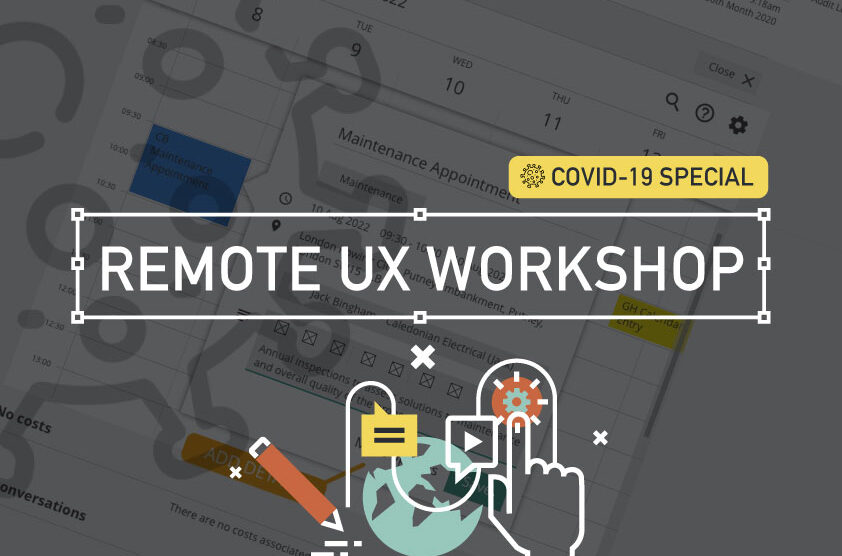
  • What I learned from facilitating a UX remote workshop – COVID-19 SPECIAL

    What I learned from facilitating a UX remote workshop – COVID-19 SPECIAL

    TLDR; Modern ux-ers need to skill-up, keep pushing best practice and do their homework when preparing for remote workshops. Adapt with more structured activities, beef-up the tech and deliver digitally with feedback and collaborative tools.

    From the T-shaped designer to a online creative technologist

    business

    Technoligy

    MArketing

    Developemnt

    As worldwide events are changing everyday life, so are the expectations of today’s experience designer. This designer is becoming more of a conduit between business and tech, between marketing and development. Linking these disciplines together is the UX expert, whether that be instituting Design Thinking or facilitating workshops, the bar is getting set higher and higher and today modern UX’er needs to be ready, and needs to be T-shaped.

    For the past few years User-Centered Design (UCD) and Lean UX has been top of my agenda and prioritising the very best elements of those ideologies is a skill I’m fine-tuning everyday. UX Workshops, in their many different guises are designed to empathise, to understand and then lead on towards a POC or some flavour of a prototype. This has many benefits from collaborative thinking through to group alignment and collective contribution. Like ideation and journey mapping all in a face-to-face collaborative style.

    Empathise to get a better understanding of the problem to be conquered. Use activities like ‘Ask the experts’ to gain insight into user needs – set aside personal assumptions and focus on defined problems. Ideate and generate logical ideas that lead to creating an inexpensive test product (prototyping). Fail early, iterate and make your product inherently better.

    In these more challenging times, how do we design professionals help to facilitate that collaborative nature from behind a computer screen and without having that face-to-face connection? Build relationships with teams distributed across the country or globe and communicate the value of journey mapping while engaging people in the process is even more challenging, especially when those people can’t witness the actual activity. Ideation and mapping exercises over-the-wire is a challenge so here is my perspective following a recent remote workshop I chaired with a real estate client.

    Pre workshop – Be like a boy scout

    PREPARE

    Agenda

    Links

    I’ve said in previous articles, you roughly need twice the presentation time for preparation and this is equally true when you’re delivering the remote flavour of a UX workshop. Leading from the front as a facilitator and as a creative technologist ultimately the success of a remote workshop does revolve around the technology you have to hand. Make no assumptions, if your connection is not strong enough or your cameras are not clear enough the success of your remote workshop is that risk. 

    Ensure you have a quiet, comfortable and illuminated room

    Think about a headset with the microphone and also about the best video conferencing solution.

    Ensure your default check boxes are all ticked here.

    Setting the Stage

    Include an agenda to manage expectations

    Following intros, the ‘Product / Feature Vision’ is first up. ‘The Challenge’ preceeds a best practice master-class on the product or feature area. Another short intro into my UCD process I then asked ‘My five big questions’ followed by a personas session. Features leading to a genuine ‘Nice to have’ discussion also helps manage expectations. This leads perfectly into a Mapping and Ideation. Keep to your agenda, its important.

    Unfortunately, you won’t have those two minutes pre-KO to ask about the weather and to build bridges, so make sure introductions are timetabled.

    Keep the conversations flowing by including the Product Vision and The Challenge Definition as early pieces on your agenda. The remote nature of these first interactions are crucial, it’s important to allow all to contribute and keep the conversation flowing by re-iterating;

    • What has been done
    • What we are doing
    • What we will do.

    Elevate the Baseline

    Asking the right questions early helps set the stage. What problem are we trying to solve and can I have the big picture? Who are the User types and the Persona and what are their pains and gains. What are the project aims and how do we measure success? A good question to ask is why use this feature and not an alternative? 

    It’s important to gauge the creative intelligence on the people in the virtual room. This should come both from your research of the attendees pre workshop, and by calling out by name to promote engagement, asking people for their introduction at the top of the hour. My experience says go with the lowest denominator and bring everyone up to speed on process, on base level concepts behind Design Thinking and on how collaborative session usually work and ask the big questions.

    • What problem are we trying to solve and can I have the big picture?
    • Who are the User types and the Persona and what are their pains and gains.
    • What are the project aims and how do we measure success?
    • Why use this feature and not an alternative? 
    • What is you question to the group?

    Don’t forget to share pre-prepared documentation or links to aid further reading across your comms channel of preference.

    Keep your process, but adapt

    Personas

    Journey Mapping

    FEature list

    Charting the steps through this journey begins with search and select, then the user can choose the time, with options for the users showing available spots in the next week. Booking information should all the information that the contractor needs and finally the journey ends with the confirmation email and/or a text message.

    Activities like early hypotheses session, through to personas building, demo’s and deep dives into feature lists discussion all still have their place in the remote workshop scenario – they just tweaking to ease them through. Everyone must understand the purpose and the outcomes of your activities. For instance customer journey mapping; recognised as one of the more challenging workshop activities especially amongst debutante participants I recognised I had to most of the heavy-lifting myself.

    My goal for this instance was to quickly understand the current journey within a limited time, involve as many internal stakeholders from bus dev, legal, CS to engineering.

    Have at hand your collaboration doc, detailing activities with timings and outlining techniques. This acts a guide through all your calls and should be shared on screen and as a single point of truth when concluding the workshop. My take out here is keep it simple, use bullet points and subtle branding.  

    Google Docs is your friend here. It’s also a good idea to later move your visual findings to Mural and Miro (formerly RealTimeBoard)

    Ideation, in a low fidelity way

    SHARE BOARDS

    CHAT & messenger apps

    Initial first stage ideas from modal windows to small reveal to large reveal concepts. All helped lay the foundations in a low fidelity, if less collaborative, way.

    When mostly everyone is remote, take advantage of Real-time board or Muraly or Sketchboard. Even splitting participants into columns on Google Sheets and allowing real-time contribution is a workable solution.

    For instance, a spontaneously pencil sketch can be captured on your mobile and shared relativity instantly across Slack, great for what I call remote ideations. These can then be cataloged in your collaboration doc and / or uploaded to your Miro board.


    Digital Prototyping from the Digital Experts

    Taking the very best of concept #2 enabling the user to both see availability but also to drill-down and add must-have functionality. Also cherry picking elements from #4 and solving the visibility of contractor availability.
    Taking the very best of concept #2 enabling the user to both see availability but also to drill-down and add must-have functionality. Also cherry picking elements from #4 and solving the visibility of contractor availability.

    There is a benefit to being digital designers thinkers in a digital world. So take advantage of this when building and eventually sharing what is in most cases, a digital prototype. Use industry standard tools your clients should be familiar with that can aid both sharing and collaborating within a remote environment.

    You should still be starting with low fidelity sketches from you Ideation Sessions (see earlier) but eventually this will lead to the big reveal. InVision is my weapon of choice here, it’s quick, it’s collaborative and it’s becoming the industry standard.


    Post workshop wrap-up 

    Personal details

    Pre-registration

    Feedback and comments will help shape and strengthen future workshops.

    In true 360 fashion and in the spirit of UCD from my remote perspective it is good practice to reach out to evaluate the effectiveness of the workshop. Ask for assistance in completing an evaluation and eave the door open to respond say within a limited time period to keep the data fresh.

    There will always be pitfalls to this type of distance collaboration, my key take-outs are;

    • Reduce friction by introducing activities more appropriate
    • Tell your team what you are about to do
    • Tell them what has been done
    • Follow your script, set out in your collaborative doc

    Finally, inform the team that there is a central repository (Dropbox or Miro or other cloud share is ideal for this) and ensure all have access; this becomes a great place to dump visuals, photos, text files or movies. This is also a great place for the collaboration doc which eventually evolves into your UX report.

    So, have fun by keeping the dynamics high, reducing distractions don’t forget to learn yourself and document religiously. Ramp up your note-taking skills, you’re going to need them!

    Appendix

    Your remote toolbox*

    • Google Docs, Sheets and Slides – the go-to applications for collaboration.
    • Real Time Board — A remote whiteboard tool for stickies and comment
    • Go To Meeting / Zoom — Video conferencing that allows you to show slides and record screens.
    • Slack – Document your chats, and share group or personal videos.
    • uxpressia.com – Online journey maps and personas

    * Please note this toolbox is by no exhaustive. This industry is was booming and pivoting every day.

  • UX Case Studies prepared for Avaloq

    UX Case Studies prepared for Avaloq

    Successful UX Design Projects

    My Top 3 UX Design Case Studies prepared for Avaloq

    I have prepared a selection of UX design projects focused on challenges, solutions, and lessons learnt within the financial landscape.

    2024 is my action year – Can I apply these lessons to any of your teams or projects?

    Case Studies

    • Real-World Messiness of Product Design

      Real-World Messiness of Product Design

      “T-shaped” expertise in Fintech, complex UX problem-solving, and commercially-minded design.

    • Raising the bar for customer-facing support UX

      Raising the bar for customer-facing support UX

      AI-Powered Customer Service Revolution – AI is transforming customer service by offering personalised solutions, and UX plays a crucial role in creating intuitive and engaging customer experiences. By leveraging AI and focusing on UX, businesses can create a more personalised, efficient, and satisfying customer experience.

    • A Frictionless Wireframe Onboarding Journey

      A Frictionless Wireframe Onboarding Journey

      Ditch the wireframes rock stories. Customers faced a confusing onboarding maze. Detailed UX wireframes transformed it into a frictionless journey, building trust and getting users invested. Clarity led to confidence and the winning play, a clear, secure, and personalised onboarding process building loyalty from the first click.

    • Using proto-personas to Know your user – Pt I

      Using proto-personas to Know your user – Pt I

      Despite resource limitations, this Content Audit project successfully utilised proto-personas to gain a deeper understanding of user needs. By consolidating and refining persona data into meaningful ‘chunks’, and effectively communicating findings to stakeholders, all lead to a deeper comprehension of users for all involved. This empowered us to move forward with the next stage –…

    • Discovery Workshop to Roadmap in 3 days

      Discovery Workshop to Roadmap in 3 days

      How to facilitate an ideation workshop around solving problems, understanding through ideation, knowledge sharing (based on agreed on personas) and then attributing those personas, via SMEs validation, to surfacing UI to promote next steps plotted on a goal-oriented roadmap.

    • Power up your designs with dark mode trend front-of-mind

      Power up your designs with dark mode trend front-of-mind

      How to design with the 2023 dark mode trend front-of-mind. Delight, speed and satisfaction are rewriting our UX playbooks in finance. A modern-day UX-er has rapidly emerged, changing the rules of the game. Part of that skill-set is the new must-have which is dark mode.

    • Pt I – Money Management App UX Challenges Explained

      Pt I – Money Management App UX Challenges Explained

      A two-part deep-dive focussing on mobile UX design targeting seasoned designer-types, mastering Design Theory, and navigating lean Agile challenges.

    • What is the role of open banking in the super app evolution?

      What is the role of open banking in the super app evolution?

      TL;DR Open Banking unlocks a future where financial apps become indispensable partners, not just tools. A shift in the balance of power, more convenience, better financial education and more meaningful relationships with users. What’s next in this ecosystem; financial freedom, bulletproof investment flows, AI…

    • Using Experience Maps to uncover user behaviour Pt II

      Using Experience Maps to uncover user behaviour Pt II

      Crafting an unforgettable investment experience within the intricate world of investor behaviour unveiled a tapestry of needs and motivations that shape financial decisions. Using Experience Mapping these insights into the customer lifecycle were uncovered and common threads exposed.

    I am available now!

    Please continue to browse to see more challenges, solutions, and lessons learnt within the fintech landscape (and others)

    Get in touch

    15 Years Experience | Workshop Wizard | Design System Ninja
    Finance | Gambling | Healthcare | Recruitment

    Say hello

    Email

    I am frequently online so will always get back you


    info@russellwebbdesign.co.uk

    Let’s connect

    LinkedIn

    Please review my profile to connect


    linkedin.com/in/webbrussell

    Download and keep

    CV
    Russell Webb is a User experience Designer who digs deeper when implementing Design Systems, who facilitates workshops with local building societies up to asset managers behemoth and who builds design teams by sharing best practice and mentoring through the stack.

    Workshops to stakeholder mngt and much more


    Or just leave a comment below.

  • Part II – Designing a Secure Document Repository; Case Study 2019

    Part II – Designing a Secure Document Repository; Case Study 2019

    TLDR; Last month I posted Part I of how I designed a service integration project within the suit of financial apps for a large international retail bank and asset manager. Part II focuses on ‘My UCD Design Process’ and ‘Future Vision’ and ‘Design Systems’
    (more…)