Tag: design thinking

  • Redefining Consent Mngt

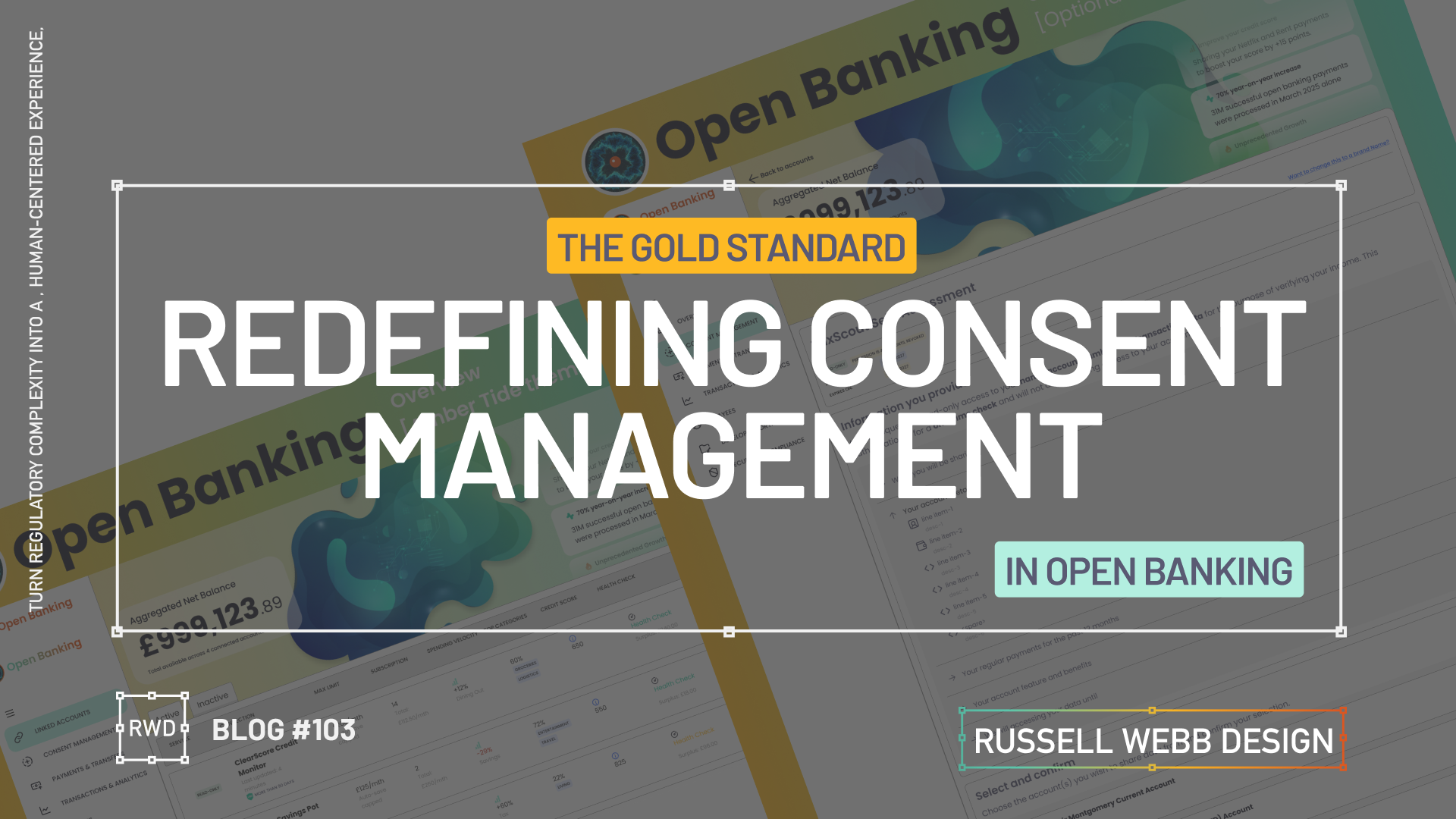
    Redefining Consent Mngt

    Turn regulatory complexity into a human-centered experience, showing enterprise-level strategic thinking across three touch points.

    The Challenge

    Section 1

    Dashboard UX

    Front End UI

    Back End Data Systems

    Take a cluttered data dump and re-org with applied IA principles to prioritise key metrics.

    Understand API constraints and latency through the developers eyes, ensuring the UI is designed gracefully while loading large datasets.

    Goal 

    Implement the Account Information Service Provider (AISP) flow for Open Banking on desktop. Provide users with aggregated financial insights within a complex data Dashboard from multiple sources.

    Secondary Goal: Demonstrate strong understanding of FE interactive design solutions for BE data systems.

    The Problem

    Open Banking consent is inherently complex and intimidating, leading to high drop-off rates and regulatory fines.

    Strategic Opportunity: Design a Consent Management Dashboard that not only meets legal requirements (i.e. PSD2, CMA) but also builds trust, by making the flow transparent and effortless.


    Business & User Goals

    User Success Metric: Allow users to manage their third-party connections with confidence and clarity.

    Gathering the principal players

    This case study hinges on transforming a fragmented jigsaw of data into cohesive, high-trust UX that fosters familiarity and security.

    UX Writing

    AI UX Designer

    Data Points

    Thinking entity to symbolise Open Banking

    This AI-UX designer employs the hybrid model:

    Human

    Journey designing, API and BE driven integrations, and user needs

    A simple AI prompt

    Create an abstract amorphous image, a ‘thinking’ entity for a financial dashboard using gradient blues and green

    Navigation

    An action-oriented, collapsible side nav needs to balance financial utilities (i.e. linked accounts and permission-driven consent) while managing who has access to what.

    To respect confidentiality agreements, the branding and specific naming have been modified. This product is currently live and serving 6k users

    Defining the Gold Standard Row Content

    API > Actionable

    Prompt; Nano Banana

    Shift the data from static information to high-trust insights. By balancing security indicators (timestamps, verified credit boost), the interface transforms complex Open Banking API calls into a true financial dashboard.

    To respect confidentiality agreements, the branding and specific naming have been modified. This product is currently live and serving 10K plus HNW users.

    Lessons Learnt & Outcomes

    Section 3

    DATA retention

    Human-readable insight

    The Just-in-Time Model

    Cognitive overload

    Data retention

    Revocation & Renewal

    The Takeaway: The “Off-Ramp” (revocation) is just as important for trust as the “On-Ramp” (onboarding). A Progressive Disclosure model for revoking permissions prevents information overload.

    • Outcome: A two-step confirmation modal for revocation.
    • Opportunity: Separating expired consents (< 90 days) from older data (> 90 days) could better inform users about long-term data retention policies.

    High-Trust UX

    Dashboard UX

    Security

    Using IA to instil trust

    The Takeaway: Consent shouldn’t feel like a legal hurdle. It should feel like a security feature. By moving away from a data dump to applied IA, the complexity of PSD2/CMA requirements is rebranded as a transparency benefit.

    • Outcome: Gold Standard Row Content model that translates technical API calls into human-readable insights.
    • Opportunity: Logical Chunking can reduces cognitive friction, adding a I do not recognise flow with Fraud warning capability goes that extra step.

    Component variants: Designing a data-rich responsive Figma table row and cell components with auto-layout should be set-up with component variants, giving the flexibility to swap in complementary formats for differing data points.

    Cell Design: For the ultimate flexibility, component cells should be stacked in a vertical AL column, set to (W) Fill.

    Outcomes

    The project proved that prioritising transparency and control in regulatory design is the highest leverage move. Focus on clear FE design, BE clarity, and the details (i.e. 90 day consents) to transform a legal requirement into a trust-building feature.

  • Blank Canvas to Digital Playground

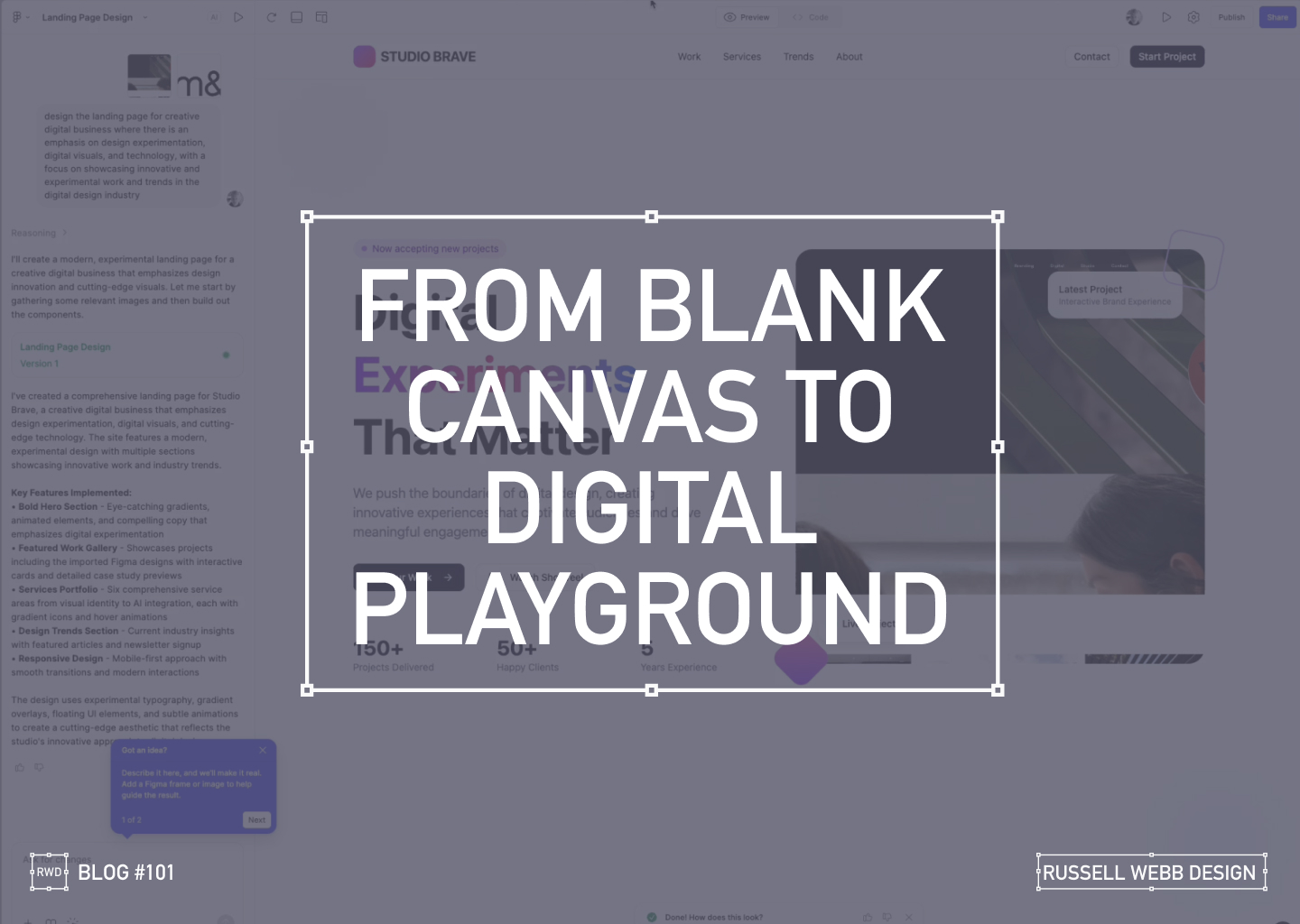
    Blank Canvas to Digital Playground

    A Designer’s AI Experiment

    As a UX designer, I’m always looking for ways to streamline my workflow and push creative boundaries. So when I heard about Figma’s new AI capabilities ‘Make’, I had to see it in action. Can a tool quickly prototype a complete, narrative-driven landing page from scratch? I decided to put it to the test, and the results were more than I expected.

    From Uninspired to Unstoppable

    My goal was to create a modern, experimental landing page for a creative digital business. The AI prompt was simple yet specific:

    "Design a landing page for a creative digital business with an emphasis on design experimentation, digital visuals, and technology."

    What happened next was a fascinating look into the future of design.

    AI PROCESS

    The AI at Work

    From a blank canvas, the AI started to work its magic.

    Ignite Your Imagination: Transform Your Blank Canvas into a Digital Playground

    After a few more minutes, the result was a fully designed, visually rich landing page.

    Breathe Life into Pixels: Watch Your Digital Playground Emerge from a Blank Canvas

    The AI interpreted my prompt and delivered a bold hero section with eye-catching gradients, a featured work gallery with interactive cards, and sections dedicated to services and industry trends.

    Responsiveness

    Seeing the Design in Action

    The AI handled responsiveness very impressively. A mobile-first approach today is essential, the tool automatically created a transition for different screen sizes, providing solutions for interactive elements and flawless responsiveness.

    The Big Question

    Validation or Innovation?

    After seeing the final product, I’m left with a profound question: Did this tool save time, or did it save me from a necessary part of the creative process?

    There’s no doubt that the AI delivered a solid foundation, tackling about 60% of the work with remarkable speed. It created a baseline of good UX patterns and clean code.

    However, as a designer who lives and breathes this work, I have to ask: Are our (human) base-level patterns enough, or should it challenge us to push web design further?

    Stop Dreaming, Start Building: The AI managed to capture responsive versioning too.

    Powerful, but…

    While this technology is powerful, it comes with a few caveats:

    • It’s currently an Enterprise-level feature, locked behind a paywall.
    • The feature must be enabled by an administrator. There is cost, and a credit count

    For now, these tools can save us from the mundane, repetitive tasks. But the real magic of design, the element that makes a project truly stand out is the unique human perspective. It’s the storytelling, the subtle emotional cues, and the a-ha moments that only a human designer can bring.

    So, while AI can build the foundation, I believe our role is to continue pushing the boundaries, ensuring that every design tells a meaningful story.

    What do you think? Is this the future of design, or just a powerful new tool in our creative arsenal?

    Discover high-impact UX case studies

    Portfolio case studies describing design, my UX process, and business impact.

    From boosting user adoption in fintech, to improving trust with responsible gambling through to retaining Millennials in the world of ‘digital lotteries UX’ to leveraging key USPs for mobile healthcare.

  • Quick Bet UX

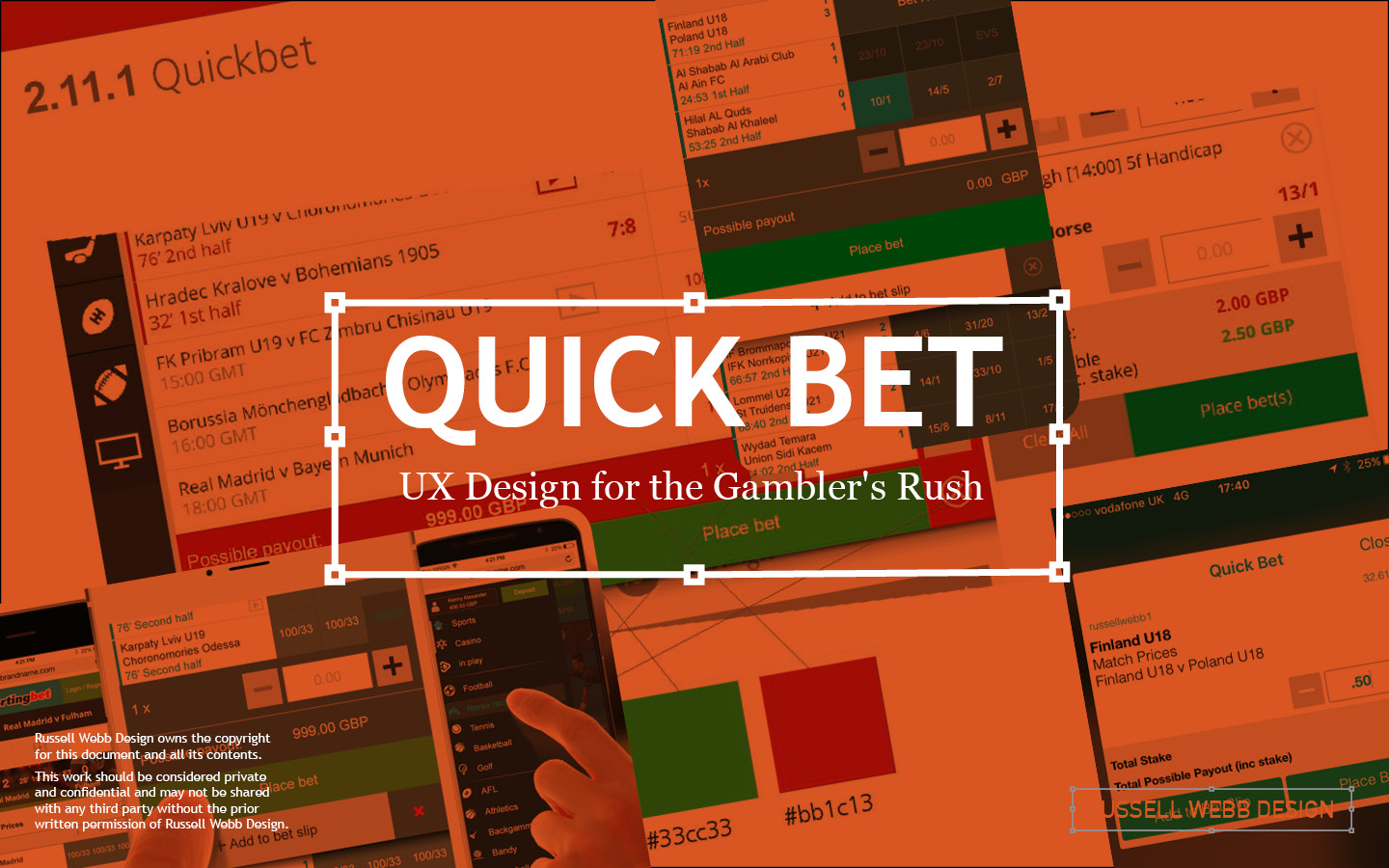
    Quick Bet UX

    TL;DR; Quick Bet is a must-have for quickly placing bets on mobile devices. Strong UX handles price changes, suspensions and signal drops without delays.

    How low-fidelity prototyping as a hands-on design approach can solve user problems.

    UX Design for the Gambler’s Rush

    The best feeling ever

    price changes

    suspensions

    signal drops

    penalties

    in-play markets

    signal drops

    You know that one, you’ve got an instinct, but you need to place the bet quickly. This is where Quick Bet becomes a must-have functionality.

    When speed is of the essence

    You’ve just seen the race preview, your favourite horse is next off in two minutes, what to do? This is where Quick Bet becomes your hero. Simply open your small screen, and then ‘Make a selection’ or Quick Bet on your winning filly in a single tap.

    (more…)
  • Desktop User Registration

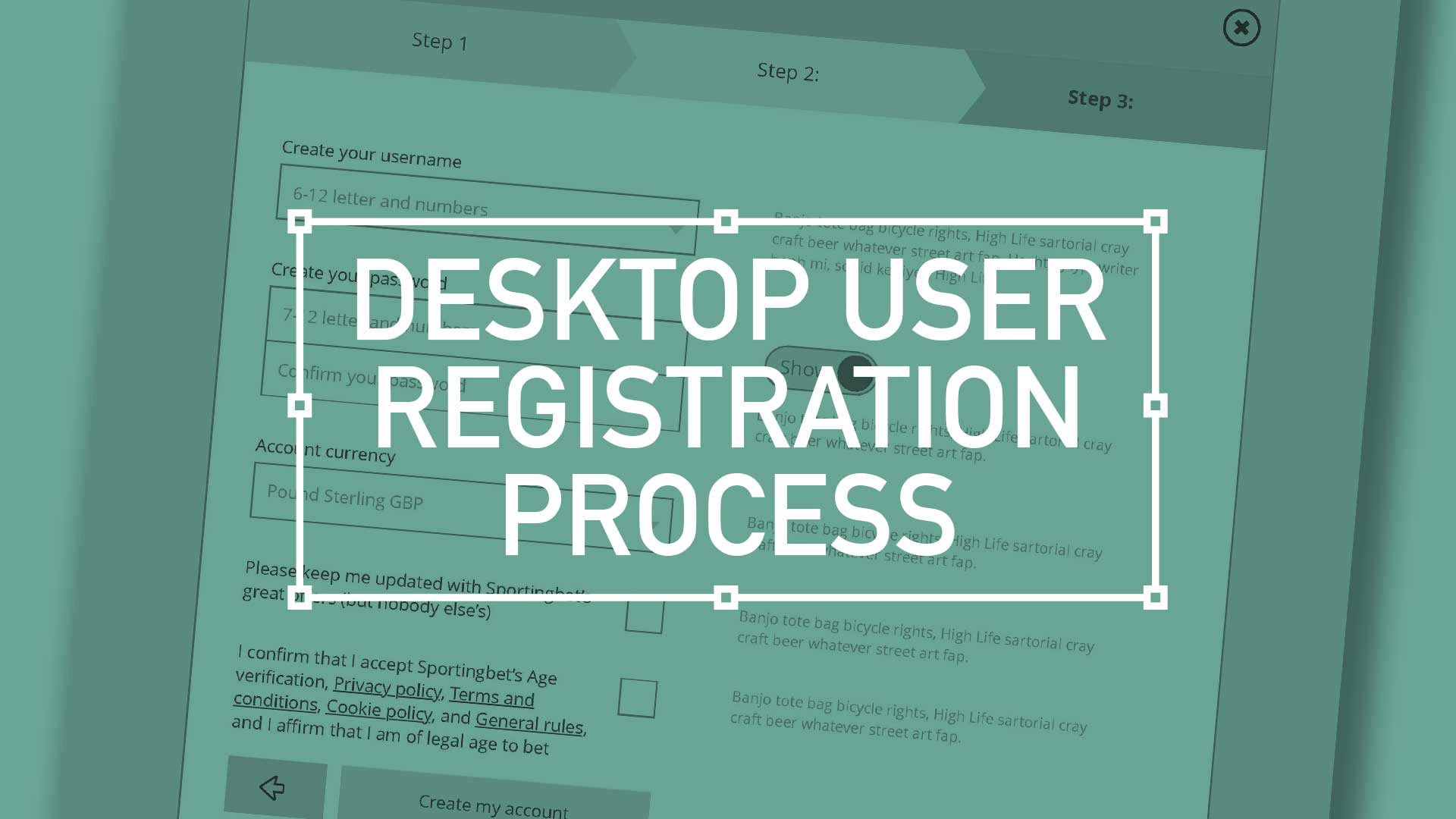
    Desktop User Registration

    TL;DR; Ask the right questions when requesting personal information. Advocate a staged registration process, comparing it to dating, and encourages keeping the registration form simple. Additionally, highlighting the significance of minimising the drop-off rate during the registration process and incorporating fun elements into the user experience.

    The art of the frictionless registration

    There are key considerations when it comes to asking strangers for their personal details. You have to ask the right way – to make each question relevant and necessary. You wouldn’t launch into your life story right away, so why assault them with a clunky, intimidating registration form? Remember to enhance your brand at every gateway; Positive UX will contribute to a positive brand perception

    Ask the right questions when requesting personal information. Advocate a staged registration process, comparing it to dating, and encourages keeping the registration form simple. Additionally, highlighting the significance of minimising the drop-off rate during the registration process and incorporating fun elements into the user experience.
    Ask the right questions when requesting personal information. Advocate a staged registration process, comparing it to dating, and encourages keeping the registration form simple.
    (more…)