Category: OTHER

  • Real-World Messiness of Product Design

    Real-World Messiness of Product Design

    The commercial mindset of a UX designer ensures outputs aren’t just blue-sky, but shippable. Here I demonstrate how complexity is a daily occurrence, how a proven track record in parallel industries handling multi-layered data and regulatory standards can translate.

    With 15+ yrs exp. I showcase technical fluency with Design Systems, with developer handovers, and platform-specific patterns. Lets dive in…>

    What I personally designed

    To respect confidentiality agreements, the branding and specific naming have been modified. This product is currently live and serving 6k users

    A Portfolio of Reality

    messy

    unclear

    complex Problems

    constraints

    Post release updates

    While defining a real-world business problem, I was able to use UX tools to uncover pain points to inform an initiative UX wireframe flow that in turn, informed the final UI.

    🚀 From Discovery to Design and Solution

    01 Problem Statement: Create a user-friendly and simplified mobile journey that helps seniors mitigate their fraud anxiety, meet financial regulatory standards and ultimately manage their finances i.e. improve their financial wellness.

    This was further expanded with the study into;

    • Low-anxiety mobile payment – Seniors face challenges with mobile payments due to fear of fraud, cognitive load, and digital literacy. Designing a system that addresses these concerns while maintaining security is crucial.
    • Business problem | Design challenge – The challenge is balancing a simplified flow with a robust, secure multi-step flow to mitigate fraud anxiety and meet industry standards.

    02 Segmentation: Identify distinct segments within the aging parent demographic. Target a segment that can most benefit from the UK Payment process. Accessibility, personalisation, security, and financial wellness are key considerations.

    03 Research & Strategy: Use quantitative data with qualitative insights to inform a Customer Journey Map. Visualise the financial and emotional challenges faced by each segment, across a given scenario.

    I prioritised accessibility and task-oriented patterns. Personalised guidance, and minimising cognitive load were also key considerations..

    04 Wire framing Design Decisions: Making trade-offs and delivering a justified UX solution. Simplified to the “What”, the “Who” and “How Much” before a final check then execution. I limited one screen to have one single, clear primary action. Components were dual functioning for  Existing Beneficiary and New Beneficiary reducing two mini journeys to one.

    05 Conclusion & Outcomes: How my decision’s successfully translate a complex real-world business problem into an initiative UX wireframe and Final UI flow.

    Key highlight

    • Key stakeholders audience established 2-months before proposed Sprint through workshopping and client relationships.
    • Pain points highlighted early, including CoP, Secondary payment reference and scope (i.e Feed and FX was descoped)
    • Cross platform UX and UI for Alpha release delivered and demo’d in 3-months
    • Developer and BA handover, Design System integration scheduled early for estimation and to provide clarity
    • Design System integrated and UX Copy Check signed-off
    • No deadlines missed 🙂

    Engineering Constraints and Design Trade-offs

    engineering constraints

    Technical realities

    trade-offs

    final outcome

    International Payments

    International payments is a complex animal. There is a fine line between delivering pixel-perfect cross-platform consistent UI and balancing that against commercial and technician reality. Recently I was in Bug Triage to get this sophisticated and geographically dependent piece of functionality across the line. Lets dive-in ->

    SWIFT/BIC, when connected to an API returns a Bank name, think of it as a post code. While the end-user has the ability to edit this code for new payees, they cannot edit the bank name [engineering constraint]. For a more harmonise UX, new and existing payees should be displayed in a consistent and non-jarring format. So I made the decision to use input fields throughout, in various states.

    My design then changes From > To :

    AI generated: For NDA reasons, I have fast-tracked these Input Fields to rapidly visualise these engineering constraints.

    The Trade-Off

    This manifested itself from an arguably more elegant From execution, to the multi-platform but feature parity To solution following both a trade-off contributing to a non-jarring, smoother, and Input field led consistency experience.

    To give context, this attention to detail was part of a much wider delivery. For NDA reasons, the forms in its full extent (1 of 3), have been altered.

    To respect confidentiality agreements, the branding and specific naming have been modified. This product is currently live and serving 6k users

    The Data-Informed Designer

    Design intuition

    qualitative or quantitative signals

    Post launch

    Retrospective improvments

    How I value results just as much as pixels.

    Dashboard UX to business UI

    Catering for demanding clients requesting instant advice, competitive quotes and investment strategies requires tailored tools, especially within a sensitive client-data environment – Welcome to the a Customer Meeting App Dashboard

    Through team interviews, ad-hoc surveys and gorilla research I defined three “must-have” features early on, so pre-launch the business needs and UX goals were transparent;

    1. Single point of access for disparate data – Five-second insight
    2. Broad overview with drill-down capabilities – Inverted pyramid
    3. Fill other process gaps easier and faster – Champion the brand | DS achievability

    Problem and Opportunity

    The existing offering had become redundant. Integrating data from third-party repositories was a priority, to achieve an improved user journey. This presented an opportunity to re-imagine the complete ‘Create a Customer Meeting’ user journey.

    There was another further top-level requirement; Funding.

    People management point: When competent business executives are supported by UX leaders who articulate good design, bridging the gap between vision and execution, this can build confidence across the entire team to get product delivery across the line.

    See: Career Growth within Design Teams

    Reimagining Client Meetings

    Step 1

    Start with the user needs

    Streamlining the preparation of a meeting, and principally future proofing the Create a Meeting process with a scalable UI that can seamlessly integrate new data repositories, ensuring long-term flexibility.

    Step 2

    Segment in to ‘zones’

    The on-screen real estate delivers a quick look experience prioritising top from bottom.

    Step 3

    Test and Challenge through Prototyping

    Visualising up to 12 users’ journeys leads to better understanding and smoother development. Boxed development will not impact working code.

    Early sketches reveal the potential of a dashboard, emphasising hierarchy through top-down, LTR user scanning patterns, pushing a hierarchical arrangement that guides the user’s eye. Data is prioritised with glance-access to preview Meeting Name top-of-mind expanding and collapsing information depending what is scope. 

    A conceptual dashboard with multiple layers

    The final solution solved both the scalability problem, providing easy access to account numbers, the ability to add other account numbers, visibility on the meeting date and time, and the meeting status and who is the meeting organiser. Complete transparency on meeting detail, including location, meeting language and notes format with extra features like Meeting Packs.

    And the results speak for themselves
    190 offices | Growth from 8% to 56% | 1.5 years

    Quantitative Signals

    The quantitative metric as a single-source-of-truth of unifying insights speak volumes: 56% iPad growth in just 1.5 years over 100K client meetings in 40 countries with approximately half of their approx 85 offices in western Europe,

    From business problem to an Enterprise-level, real-time data dashboard from multiple sources, instantly accessed, no more hunting.

    Qualitative Design Trade-Offs

    On reflection post launch, one key factor in the development (and acceptance) of this new radical design was achievability. Funding is also a key developmental constraint so designing with business realities is key. This inevitably constrains blue-sky thinking, a real change outside of budget and possibly a missed opportunity was to re-pitch this design for responsively iPad (landscape and portrait) or to expand on the ‘mini’ and  ‘maxi’ concept from full disclosure down to dashboard snippets. Maybe in Phase 2!

    Career Growth within Design Teams

    How to hook new customers

    Ambiguity

    Ownership

    Resourcefulness

    When customers make a product selection there is a lot going on behind the scenes. Desktop new product onboarding carries a lot of functional weight, it is a prime candidate to wireframe. Capturing a large selection of unique steps requires enterprise-level wire framing skills.

    Defining the Problem

    Imagine a new or existing customer discovering your product. The onboarding process can often feel like a daunting maze. This is where detailed wireframes step-up, transforming a journey into a smooth, secure and clear experience. Early decisions were made to leverage a pre-existing Design System. High fidelity wireframes became the way forward with Figma as the wire-framing tool of choice. 

    Onboarding Flow & Development Preparation

    Process flow diagrams were thin on the ground, little research was available and there was a lot of ambiguity. This was an opportunity! I took it on myself to deeply understand how personal details were collected, how email and SMS validation data flows worked, understand business goals and success metrics, so the technical team can move forward. This was a calculated risk!

    Segmenting the UX Wire-framing Process

    1 – Guiding the First Steps

    Personal details

    Pre-registration

    The process begins the moment a product ID is entered as the customer clicks a product. These wireframes propose a gentle walk-through, hand-holding the customer and setting clear expectations. As personal details are collected, the system identifies pre-registrations, streamlining the experience. For unrecognised products, the UI gracefully handles the situation, preventing frustration.

    2 – Building Trust and Security

    KYC process

    Tax jurisdiction

    GDPR

    IDV

    Next, the validation screen requests a unique member ID, followed by a secure OTP process. This includes both email and mobile verification, paving the way for a robust KYC process.

    The customer identifies their tax jurisdiction, providing identification proof, as part of a seamless IDV (Identity Verification) experience. To ensure compliance with regional regulations, the system also gathers marketing and accessibility permissions, adhering to GDPR guidelines.

    3 – Personalisation Meets Regulation

    Investment pledge

    NI (UK)

    This joined-up onboarding process seamlessly transitions the customer from initial product selection to specifying their investment pledge.  Furthermore, their National Insurance ID is verified, ensuring 360˚ compliance.

    4 – A Smooth Conclusion

    Confirm Message

    Next steps

    UAT Testing

    Prototyping

    Finally, once all data is collected, it’s securely transmitted to the BE. The FE then provides clear messaging, confirming a successful onboarding experience. This leaves the customer feeling confident and ready for next steps. Wires were shared for feedback across the team, including stakeholder, technical leads and PO’s.

    Fine tune the results

    Sneak preview of the final delivered User Interface (UI)

    The process is still fresh, typically next steps are Usability Testing and Heuristic Evaluation. Prototyping, with QAs on standby, is another option to verify and test stakeholder feedback.

    Conclusion and Impact

    Ambiguity

    Clarity

    These wireframes don’t just showcase a process; they tell a simple story of a complex customer experience.

    By prioritising clarity (onboarding steps) and security (verification and OTP) this onboarding journey fosters trust and loyalty from the very first click.

  • UX Case Studies prepared for Avaloq

    UX Case Studies prepared for Avaloq

    Successful UX Design Projects

    My Top 3 UX Design Case Studies prepared for Avaloq

    I have prepared a selection of UX design projects focused on challenges, solutions, and lessons learnt within the financial landscape.

    2024 is my action year – Can I apply these lessons to any of your teams or projects?

    Case Studies

    • Real-World Messiness of Product Design

      Real-World Messiness of Product Design

      “T-shaped” expertise in Fintech, complex UX problem-solving, and commercially-minded design.

    • Raising the bar for customer-facing support UX

      Raising the bar for customer-facing support UX

      AI-Powered Customer Service Revolution – AI is transforming customer service by offering personalised solutions, and UX plays a crucial role in creating intuitive and engaging customer experiences. By leveraging AI and focusing on UX, businesses can create a more personalised, efficient, and satisfying customer experience.

    • A Frictionless Wireframe Onboarding Journey

      A Frictionless Wireframe Onboarding Journey

      Ditch the wireframes rock stories. Customers faced a confusing onboarding maze. Detailed UX wireframes transformed it into a frictionless journey, building trust and getting users invested. Clarity led to confidence and the winning play, a clear, secure, and personalised onboarding process building loyalty from the first click.

    • Using proto-personas to Know your user – Pt I

      Using proto-personas to Know your user – Pt I

      Despite resource limitations, this Content Audit project successfully utilised proto-personas to gain a deeper understanding of user needs. By consolidating and refining persona data into meaningful ‘chunks’, and effectively communicating findings to stakeholders, all lead to a deeper comprehension of users for all involved. This empowered us to move forward with the next stage –…

    • Discovery Workshop to Roadmap in 3 days

      Discovery Workshop to Roadmap in 3 days

      How to facilitate an ideation workshop around solving problems, understanding through ideation, knowledge sharing (based on agreed on personas) and then attributing those personas, via SMEs validation, to surfacing UI to promote next steps plotted on a goal-oriented roadmap.

    • Power up your designs with dark mode trend front-of-mind

      Power up your designs with dark mode trend front-of-mind

      How to design with the 2023 dark mode trend front-of-mind. Delight, speed and satisfaction are rewriting our UX playbooks in finance. A modern-day UX-er has rapidly emerged, changing the rules of the game. Part of that skill-set is the new must-have which is dark mode.

    • Pt I – Money Management App UX Challenges Explained

      Pt I – Money Management App UX Challenges Explained

      A two-part deep-dive focussing on mobile UX design targeting seasoned designer-types, mastering Design Theory, and navigating lean Agile challenges.

    • What is the role of open banking in the super app evolution?

      What is the role of open banking in the super app evolution?

      TL;DR Open Banking unlocks a future where financial apps become indispensable partners, not just tools. A shift in the balance of power, more convenience, better financial education and more meaningful relationships with users. What’s next in this ecosystem; financial freedom, bulletproof investment flows, AI…

    • Using Experience Maps to uncover user behaviour Pt II

      Using Experience Maps to uncover user behaviour Pt II

      Crafting an unforgettable investment experience within the intricate world of investor behaviour unveiled a tapestry of needs and motivations that shape financial decisions. Using Experience Mapping these insights into the customer lifecycle were uncovered and common threads exposed.

    I am available now!

    Please continue to browse to see more challenges, solutions, and lessons learnt within the fintech landscape (and others)

    Get in touch

    15 Years Experience | Workshop Wizard | Design System Ninja
    Finance | Gambling | Healthcare | Recruitment

    Say hello

    Email

    I am frequently online so will always get back you


    info@russellwebbdesign.co.uk

    Let’s connect

    LinkedIn

    Please review my profile to connect


    linkedin.com/in/webbrussell

    Download and keep

    CV
    Russell Webb is a User experience Designer who digs deeper when implementing Design Systems, who facilitates workshops with local building societies up to asset managers behemoth and who builds design teams by sharing best practice and mentoring through the stack.

    Workshops to stakeholder mngt and much more


    Or just leave a comment below.

  • [ARCHIVE] Todays’ life of a UX consultant

    Consulting offers intellectual challenge and expertise building, but lacks long-term team bonding and showcasing the full project lifecycle

    Being a multi skilled UX-er can drive you crazy, here is how to continually drive your creativity and how to pick and choose that slice of the cake that most challenges you.

    (more…)
  • [ARCHIVE] More NFC Ideas – Will this ever catch on? – Circa 2008

    Back in the day I consulted with a company on early concepts for NFC. Now, some years later it is interesting to re-visit those concepts and see that  I wasn’t far off (where other concepts were way off!).

    PayWithYourPhone

    Your ‘Digital Wallet’

    Ditching your travel card, your loyalty card and your credit card and replacing it with your trusty phone is a scary prospect for the legions of our ever-so-forgetful society that loose their phone once a year. But in reality, giving up these collection of work security cards, Eurostar tickets and debit / payment cards is an easy choice – just allow your phone to mange it all.

    Back in 2008 I worked with a prominent high street loan provider, on their mobile roadmap for the next two years. Believe me, there were some very high-flying ideas floating around that boardroom… here is a high level run-though of some of the concepts.

    (more…)
  • Desktop User Registration

    Desktop User Registration

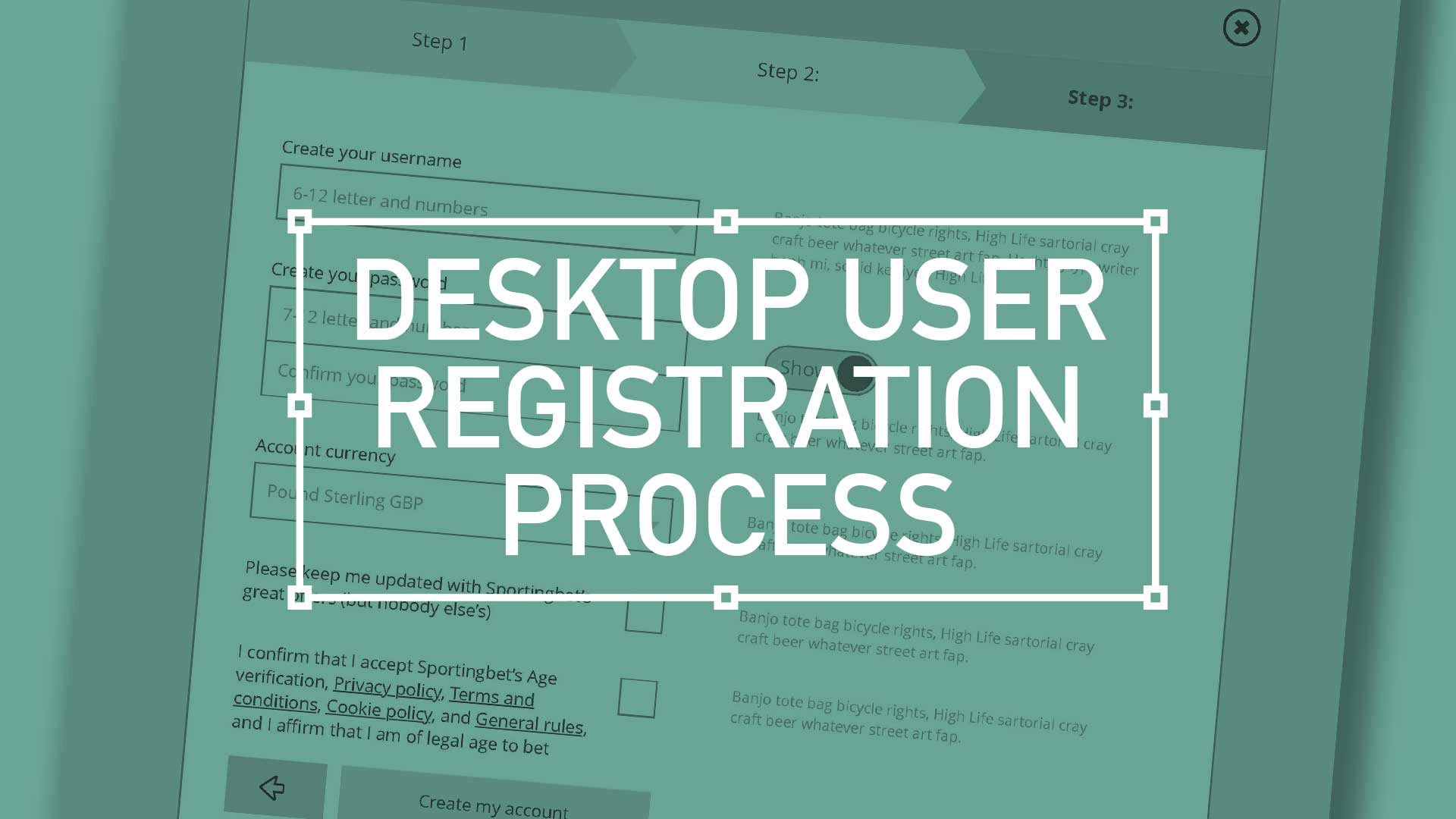
    TL;DR; Ask the right questions when requesting personal information. Advocate a staged registration process, comparing it to dating, and encourages keeping the registration form simple. Additionally, highlighting the significance of minimising the drop-off rate during the registration process and incorporating fun elements into the user experience.

    The art of the frictionless registration

    There are key considerations when it comes to asking strangers for their personal details. You have to ask the right way – to make each question relevant and necessary. You wouldn’t launch into your life story right away, so why assault them with a clunky, intimidating registration form? Remember to enhance your brand at every gateway; Positive UX will contribute to a positive brand perception

    Ask the right questions when requesting personal information. Advocate a staged registration process, comparing it to dating, and encourages keeping the registration form simple. Additionally, highlighting the significance of minimising the drop-off rate during the registration process and incorporating fun elements into the user experience.
    Ask the right questions when requesting personal information. Advocate a staged registration process, comparing it to dating, and encourages keeping the registration form simple.
    (more…)